Victor

Setting Up Clean Azure VNets, Subnets & Tagging

A Practical Lab Guide from Beginner to Pro. Behind every secure, reliable, and scalable Azure environment is a well-designed network foundation. Azure Virtual Network enables secure communication between Azure resources, internet access, and hybrid connectivity to on-premises environments. Poor planning at this layer often leads to IP exhaustion, security gaps, and costly redesigns. In this hands-on lab, you’ll learn how to design and deploy a clean Azure VNet, structure subnets correctly, and apply resource tagging for governance and cost management—the same way it’s done in real enterprise environments.

Setting Up Clean Azure VNets, Subnets & Tagging Read More »

Automating Active Directory User and Group Management with PowerShell

Step-by-step lab: creating users, OUs, security groups, and group memberships using PowerShell Managing users and groups manually through graphical tools can be time-consuming and error-prone in enterprise environments. PowerShell provides a fast, consistent, and repeatable way to manage Active Directory, making it a core skill for system administrators. In this hands-on lab, I demonstrate how to automate common Active Directory tasks using PowerShell, including Creating a new AD user Placing the user in a specific Organizational Unit (OU) Creating a new Security Group in a designated OU Adding the user to the Security Group

Automating Active Directory User and Group Management with PowerShell Read More »

DHCP Server Deployment on Hyper-V: From Scope Creation to Failover Configuration

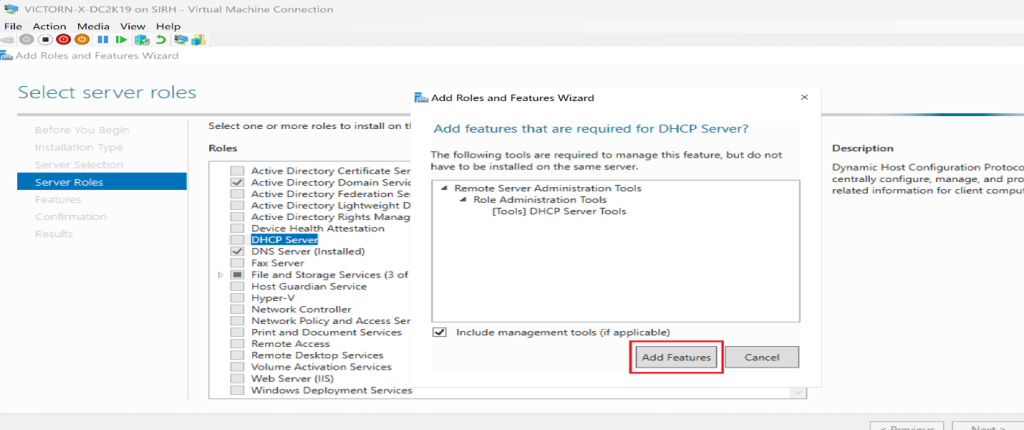
Step-by-step deployment of a highly available DHCP service in a Hyper-V virtual environment In modern enterprise networks, manual IP address management is impractical, error-prone, and costly. As environments scale across on-premises, virtualized, and hybrid infrastructures, automated IP address allocation becomes essential. In this hands-on lab, I set up, deployed, and documented a fully functional DHCP server running on a Windows Server Hyper-V virtual machine, covering everything from scope configuration to high-availability DHCP failover.This lab mirrors how enterprises reliably distribute and manage IP addressing across production networks

DHCP Server Deployment on Hyper-V: From Scope Creation to Failover Configuration Read More »

Hands-On Lab: Scalable Hyper-V Storage with iSCSI, VHDs & Storage Pools

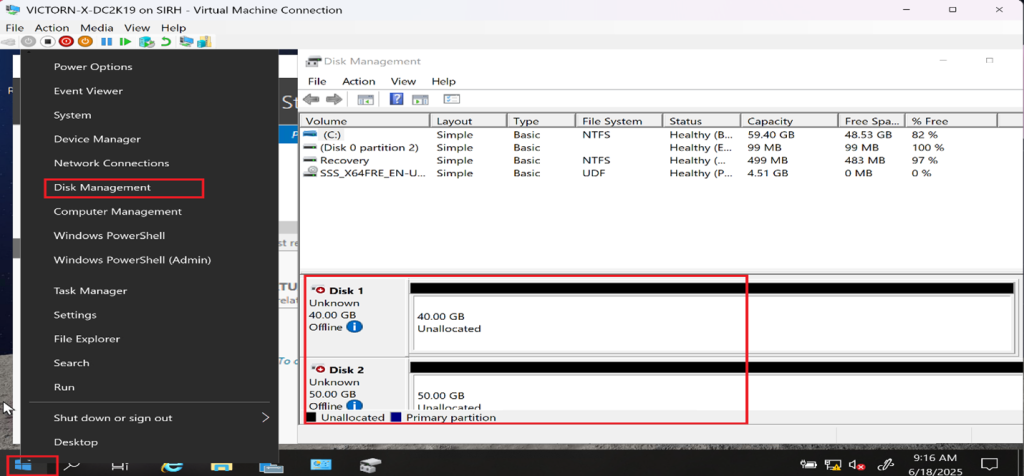
Virtual Disks, Storage Pools, and iSCSI – The Hidden Challenges of Hyper-V Storage (And How I Solved Them) Managing storage in virtualized environments isn’t just about adding disks—it’s about ensuring performance, scalability, and resilience, while controlling costs and downtime. Whether dealing with aging on-prem hardware, hybrid workloads, or budget-sensitive cloud extensions, storage design directly impacts stability and growth. In this hands-on lab, I walk through how I approached Hyper-V storage design while consolidating multiple workloads, focusing on practical, repeatable steps that scale from lab environments to production.

Hands-On Lab: Scalable Hyper-V Storage with iSCSI, VHDs & Storage Pools Read More »

How to Configure Desktop Backgrounds, Power Settings, and Legal Notices Using Group Policy

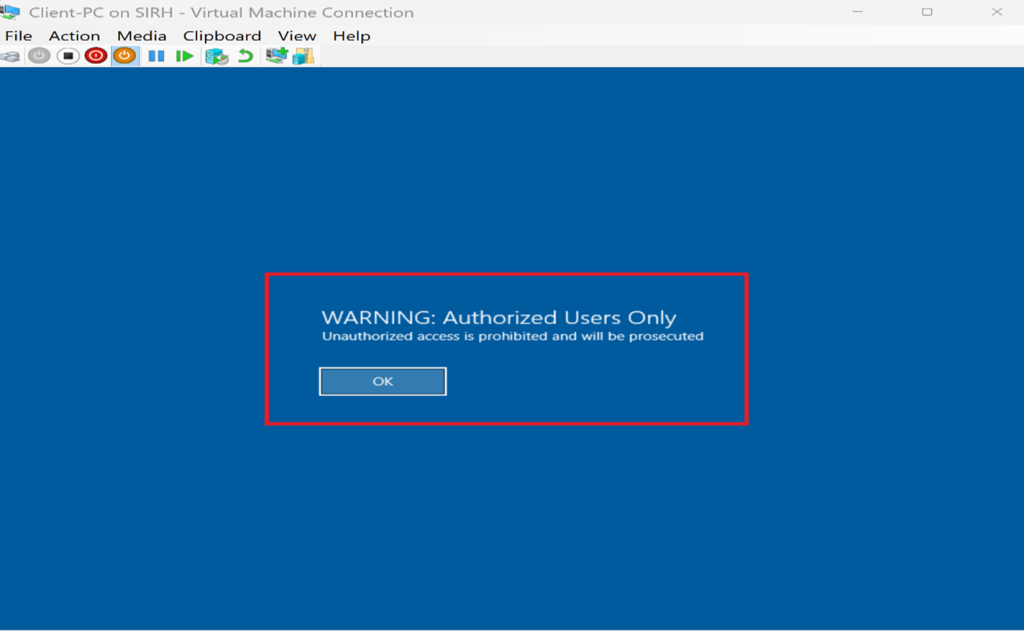
In this lab, I implemented key Group Policy configurations to standardize system behavior, improve user experience, and strengthen security awareness across all domain-joined devices. The configuration focuses on: Enforcing a consistent and professional desktop environment Preventing unauthorized or accidental system shutdowns Displaying a clear security and legal notice to users before sign-in All policies were deployed centrally using Group Policy Management on Windows Server 2019, ensuring consistent application across both on-site and hybrid environments.

How to Configure Desktop Backgrounds, Power Settings, and Legal Notices Using Group Policy Read More »

How to Restrict USB and Removable Storage Devices using Group Policy in Active Directory

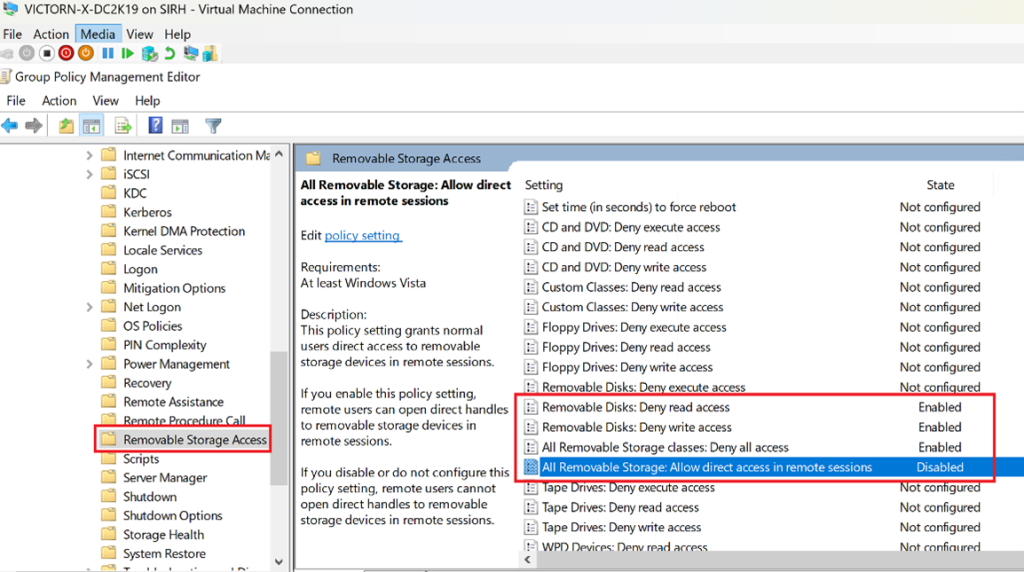
This lab documents a real-world Group Policy implementation used to restrict USB drives, external hard drives, and all removable storage devices across domain-joined systems in an Active Directory environment. The configuration addresses a critical security risk in modern on-premises and hybrid environments by preventing unauthorized data transfers, blocking removable media access, and securing Remote Desktop sessions.

How to Restrict USB and Removable Storage Devices using Group Policy in Active Directory Read More »

How to Configure Secure File System Management with NTFS Permissions and Mapped Drives in a Windows Server Domain (Lab Guide)

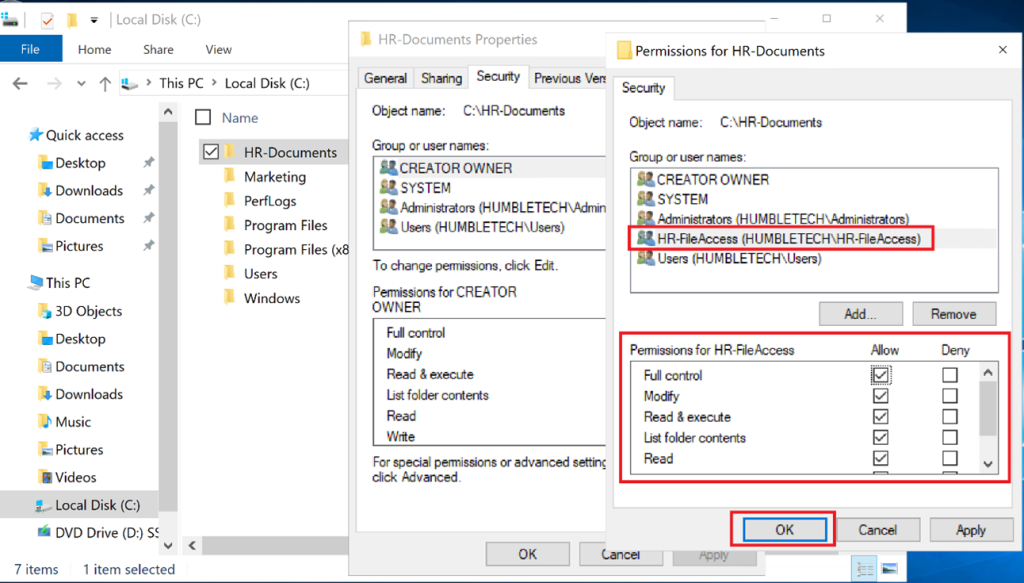
This lab demonstrates how to design and implement secure file system management in a domain environment using Active Directory, Windows Server 2019, and Hyper-V. The focus is on enterprise-style file sharing, using NTFS permissions, group-based access control, and mapped network drives, all aligned with real-world Windows domain best practices.

How to Configure Secure File System Management with NTFS Permissions and Mapped Drives in a Windows Server Domain (Lab Guide) Read More »

Step-by-Step Guide: Creating a Client Computer and Joining It to a Domain (Hyper-V Lab Setup)

As part of building a realistic domain-based environment, this lab demonstrates how to create a client computer and join it to an existing Active Directory Domain Services (AD DS) domain hosted on Windows Server 2019, using Hyper-V. A domain environment is incomplete without client machines. Joining a client computer allows you to validate authentication, Group Policy processing, and centralized identity management, just as in real enterprise networks.

Step-by-Step Guide: Creating a Client Computer and Joining It to a Domain (Hyper-V Lab Setup) Read More »

How to Add a Secondary Domain Controller to an Existing Domain (Hyper-V Lab)

As part of strengthening an Active Directory Domain Services (AD DS) environment, this lab demonstrates how to add a secondary (additional) Domain Controller to an existing domain hosted on Windows Server using Hyper-V. The objective is to introduce redundancy, replication, and improved availability, which reflects standard enterprise Active Directory deployments.

How to Add a Secondary Domain Controller to an Existing Domain (Hyper-V Lab) Read More »

Managing Active Directory: Create OUs, Groups, and Users on Windows Server 2019 (Hyper-V Lab)

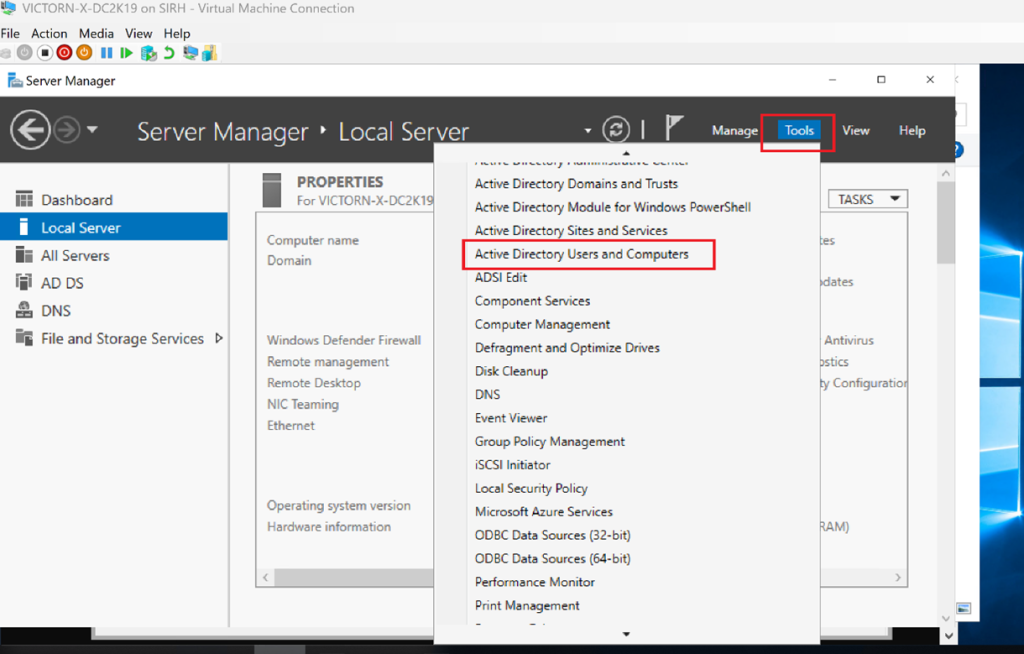
After deploying Active Directory Domain Services (AD DS) on a Windows Server 2019 virtual machine using Hyper-V, the next logical step is to configure core Active Directory objects that reflect a real enterprise environment. This lab focuses on Organizational Units (OUs), Groups, and Users, which form the foundation of identity, access control, and administration in Active Directory.

Managing Active Directory: Create OUs, Groups, and Users on Windows Server 2019 (Hyper-V Lab) Read More »

We use cookies to personalise content and ads, to provide social media features and to analyse our traffic. We also share information about your use of our site with our social media, advertising and analytics partners. View more
Cookies settings
Accept
Decline
Privacy & Cookie policy
Privacy & Cookies policy
Cookie name Active

Who we are

Suggested text: Our website address is: https://humbletech.cloud.

Comments

Suggested text: When visitors leave comments on the site we collect the data shown in the comments form, and also the visitor’s IP address and browser user agent string to help spam detection. An anonymised string created from your email address (also called a hash) may be provided to the Gravatar service to see if you are using it. The Gravatar service Privacy Policy is available here: https://automattic.com/privacy/. After approval of your comment, your profile picture is visible to the public in the context of your comment.

Media

Suggested text: If you upload images to the website, you should avoid uploading images with embedded location data (EXIF GPS) included. Visitors to the website can download and extract any location data from images on the website.

Cookies

Suggested text: If you leave a comment on our site you may opt in to saving your name, email address and website in cookies. These are for your convenience so that you do not have to fill in your details again when you leave another comment. These cookies will last for one year. If you visit our login page, we will set a temporary cookie to determine if your browser accepts cookies. This cookie contains no personal data and is discarded when you close your browser. When you log in, we will also set up several cookies to save your login information and your screen display choices. Login cookies last for two days, and screen options cookies last for a year. If you select "Remember Me", your login will persist for two weeks. If you log out of your account, the login cookies will be removed. If you edit or publish an article, an additional cookie will be saved in your browser. This cookie includes no personal data and simply indicates the post ID of the article you just edited. It expires after 1 day.

Embedded content from other websites

Suggested text: Articles on this site may include embedded content (e.g. videos, images, articles, etc.). Embedded content from other websites behaves in the exact same way as if the visitor has visited the other website. These websites may collect data about you, use cookies, embed additional third-party tracking, and monitor your interaction with that embedded content, including tracking your interaction with the embedded content if you have an account and are logged in to that website.

Who we share your data with

Suggested text: If you request a password reset, your IP address will be included in the reset email.

How long we retain your data

Suggested text: If you leave a comment, the comment and its metadata are retained indefinitely. This is so we can recognise and approve any follow-up comments automatically instead of holding them in a moderation queue. For users that register on our website (if any), we also store the personal information they provide in their user profile. All users can see, edit, or delete their personal information at any time (except they cannot change their username). Website administrators can also see and edit that information.

What rights you have over your data

Suggested text: If you have an account on this site, or have left comments, you can request to receive an exported file of the personal data we hold about you, including any data you have provided to us. You can also request that we erase any personal data we hold about you. This does not include any data we are obliged to keep for administrative, legal, or security purposes.

Where your data is sent

Suggested text: Visitor comments may be checked through an automated spam detection service.
Save settings
Scroll to Top